Verifying AI Sources: How Students Check for Accuracy

Verifying AI Sources: How Students Check for Accuracy
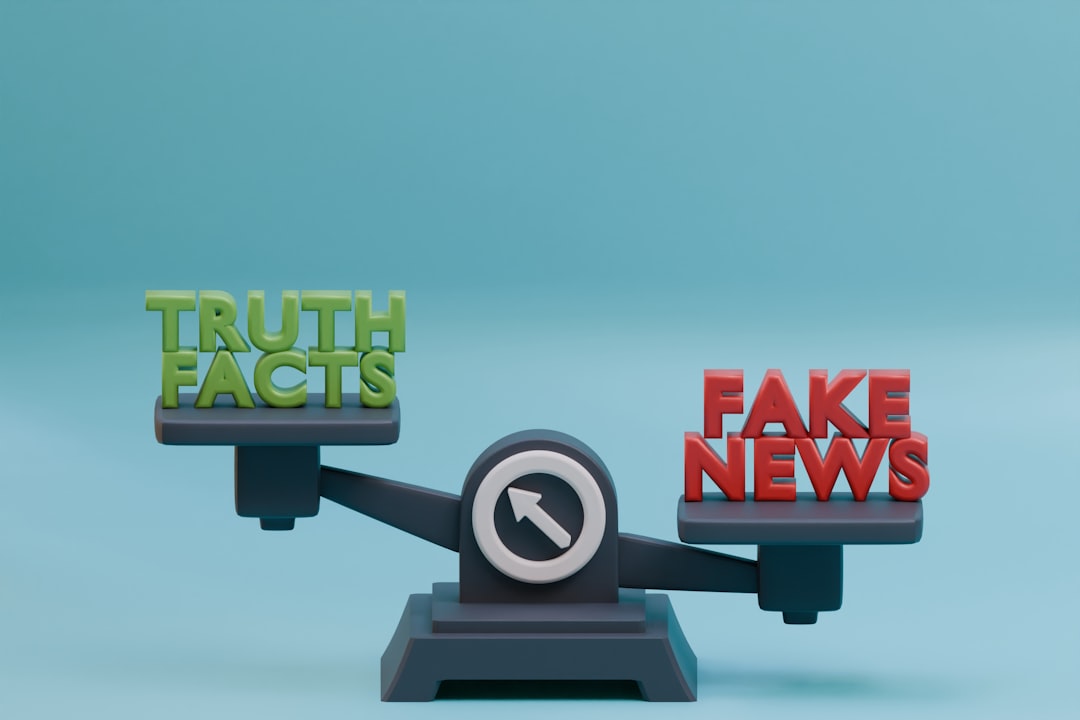
You asked ChatGPT a question. It gave you an answer that sounds confident, well-structured, and completely plausible. But here’s the problem: AI tools hallucinate. They make things up. They cite papers that don’t exist and attribute quotes to people who never said them.
This isn’t a flaw you can ignore. A 2023 study from Stanford found that GPT-4 fabricated citations in roughly 3% of academic-style responses. That might sound small until you realize one fake source in your research paper could tank your grade-or worse, your academic standing.
So how do you actually verify what AI tells you? This guide walks you through a practical system.
Why AI Verification Matters for Your Academic Work
AI language models don’t “know” facts the way humans do. They predict what text should come next based on patterns. Sometimes that prediction matches reality - sometimes it doesn’t.
The consequences for students are real:
- Failed assignments when professors check your sources and find they don’t exist
- Academic integrity violations if your school considers unverified AI content as academic dishonesty
- Wasted time building arguments on foundations that crumble under scrutiny
- Damaged credibility with instructors who lose trust in your research abilities
Verification isn’t optional busywork. It’s the skill that separates students who use AI effectively from those who get burned by it.
Step 1: Identify What Needs Verification
Not everything AI generates requires the same level of scrutiny. Start by categorizing the claims.
Always verify:
- Statistics and numerical data
- Direct quotes attributed to specific people
- Citations to books, papers, or articles
- Historical dates and events
- Scientific claims and study findings
- Legal information or policy details
Lower priority (but still check if important to your argument):
- General explanations of well-known concepts
- Definitions of common terms
- Broad summaries of established theories
Here’s a practical example. Say ChatGPT tells you: “According to a 2022 study by researchers at MIT, students who use AI tools score 23% higher on research assignments.
That sentence contains four verifiable claims:
- A study exists 2 - it’s from 2022
- MIT researchers conducted it
Each one could be wrong - each one needs checking.
Step 2: Cross-Reference with Authoritative Sources
Once you’ve identified claims to verify, go find primary sources. Don’t just Google the claim and accept the first result.
For academic citations:
- Search Google Scholar for the exact paper title
- Check the university library database
- Look up the author’s institutional page or ORCID profile
For statistics:
- Find the original study, survey, or report
- Verify the method makes sense
- Check if the number is being used in proper context
For quotes:
- Search the exact phrase in quotes on Google
- Check quote databases like Wikiquote (with skepticism-they’re not perfect either)
- Find the original speech, interview, or publication
Troubleshooting tip: If you can’t find a source after 10-15 minutes of searching, it probably doesn’t exist. AI-generated citations often sound real but aren’t.
Step 3: Use Verification Tools and Databases
Several tools can speed up your verification process.
For fact-checking claims:
- Snopes and PolitiFact for viral claims and political statements
- FactCheck.org for policy-related information
- Reuters Fact Check for news-related claims
For academic sources:
- CrossRef.org to verify DOI numbers and paper existence
- Google Scholar’s “Cited by” feature to see if legitimate researchers reference a paper
- Retraction Watch database to check if a paper was withdrawn
For detecting AI hallucinations specifically:
- Consensus. app searches peer-reviewed papers and shows actual findings
- Elicit. org provides evidence-based answers with traceable sources
- Perplexity.
A practical workflow: Copy the AI’s claim into Consensus or Perplexity. Compare what they find against what the original AI told you. Discrepancies are red flags.
Step 4: Apply the SIFT Method
The SIFT framework, developed by digital literacy expert Mike Caulfield, works well for quick verification.
S - Stop Pause before accepting or sharing information. Recognize that your first instinct to believe confident-sounding text is a vulnerability.
I - Investigate the source Who created this information? What’s their expertise - what’s their motivation? A pharmaceutical company’s study on their own drug requires more skepticism than independent research.
F - Find better coverage Don’t rely on one source. Search for other outlets covering the same claim. If only one obscure website mentions a “groundbreaking study,” that’s suspicious.
T - Trace claims to origin Follow the citation chain back to the original source. News articles cite reports - reports cite studies. Studies cite data - get to the beginning.
This whole process can take 2-5 minutes per major claim. That’s nothing compared to the time you’d waste building on bad information.
Step 5: Document Your Verification Process
Keep records. This protects you and improves your research habits.
Create a simple verification log:
| AI Claim | Source Found? | Verified Accurate?
Why bother? Three reasons:
- Professors increasingly ask students to show their verification process
- You’ll notice patterns in what AI gets wrong
Common Verification Mistakes to Avoid
**Trusting the AI’s confidence level. ** ChatGPT sounds equally certain whether it’s right or wrong. Confidence in tone means nothing.
**Verifying with another AI. ** Asking Claude to verify ChatGPT’s claims just gives you a second guess. You need human-verified sources.
**Stopping at Wikipedia. ** Wikipedia is a starting point, not an endpoint. Follow Wikipedia’s citations to primary sources.
**Assuming recent dates mean recent knowledge. ** AI training data has cutoff dates. A model might confidently discuss “2023 research” based on predictions rather than actual 2023 publications.
**Checking only the first claim. ** If an AI response contains five factual claims and you verify one, you’ve verified 20% of the content. That’s not enough.
Building Verification Into Your Workflow
Don’t treat verification as a separate final step. Integrate it throughout your research process.
When gathering initial information: Ask AI for sources explicitly. “Provide peer-reviewed sources for this claim” forces the model to be more specific-and makes fabrications easier to spot.
When outlining: Verify major claims before building your argument around them. Discovering a foundation is weak after you’ve written 1,500 words hurts.
When drafting: Keep a browser tab open to Google Scholar. Check sources as you incorporate them rather than in a marathon session at the end.
Before submitting: Do a final sweep. Read through and flag every factual claim. Verify anything you haven’t already checked.
This approach takes maybe 15-20% longer than blind trust. But it produces work that actually holds up.
The Bigger Picture
Verification skills aren’t just about protecting your grades. They’re about becoming a better thinker.
The students who learn to critically evaluate AI output now will have a significant advantage. As these tools become more integrated into professional work, the ability to separate accurate AI assistance from confident-sounding nonsense becomes a career skill.
Start building that skill today - your professors will notice. Your future employers will value it. And you’ll actually learn something rather than just generating text.
The AI gave you an answer. Now your job is to figure out if it’s true.